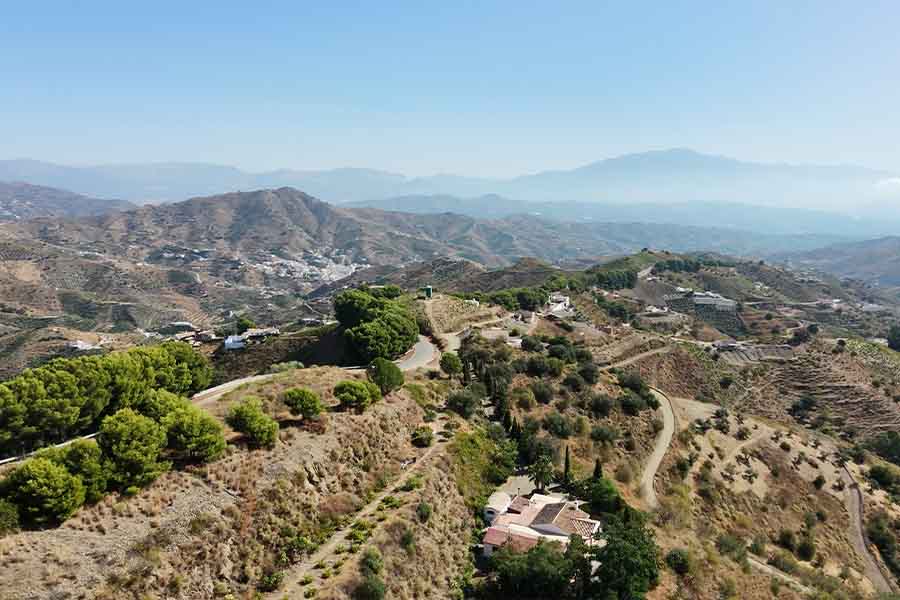
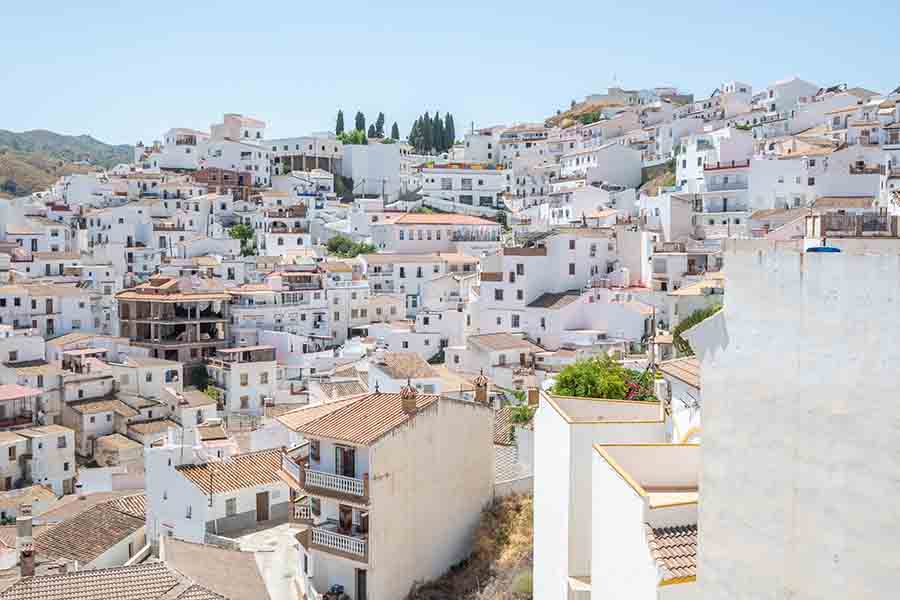
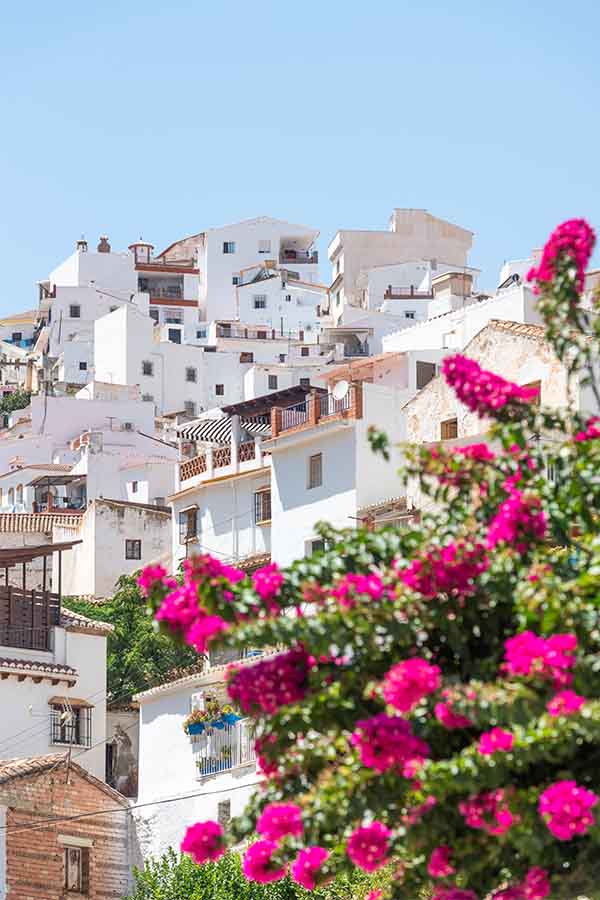
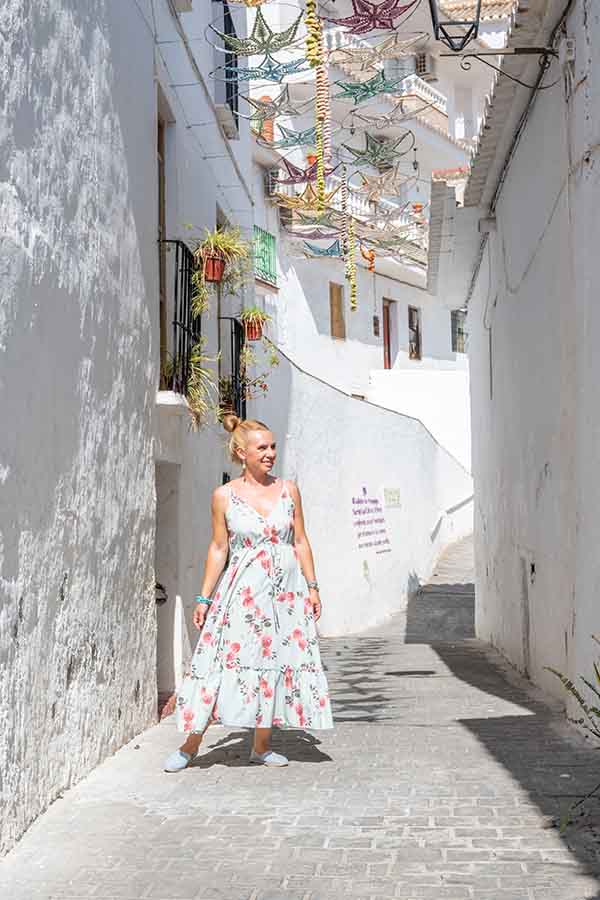
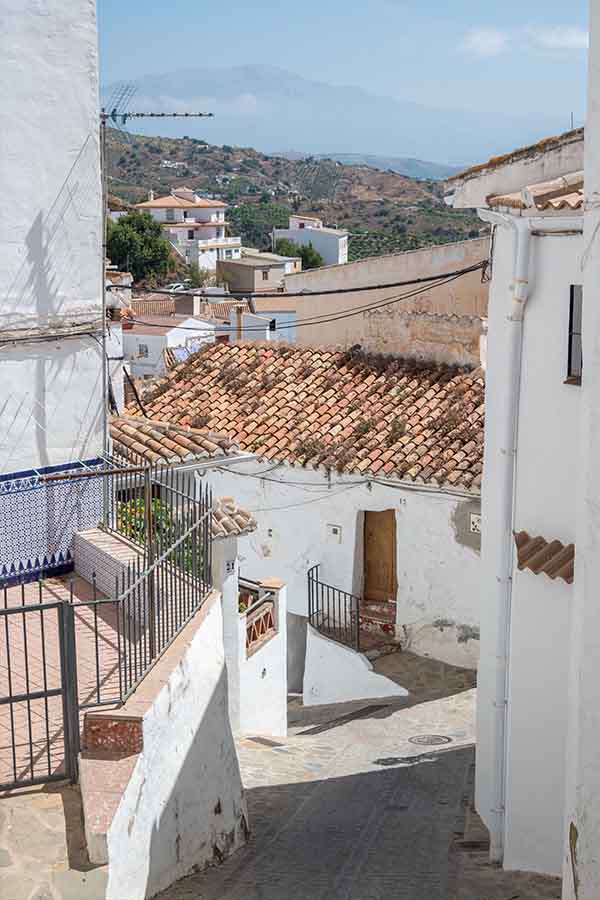
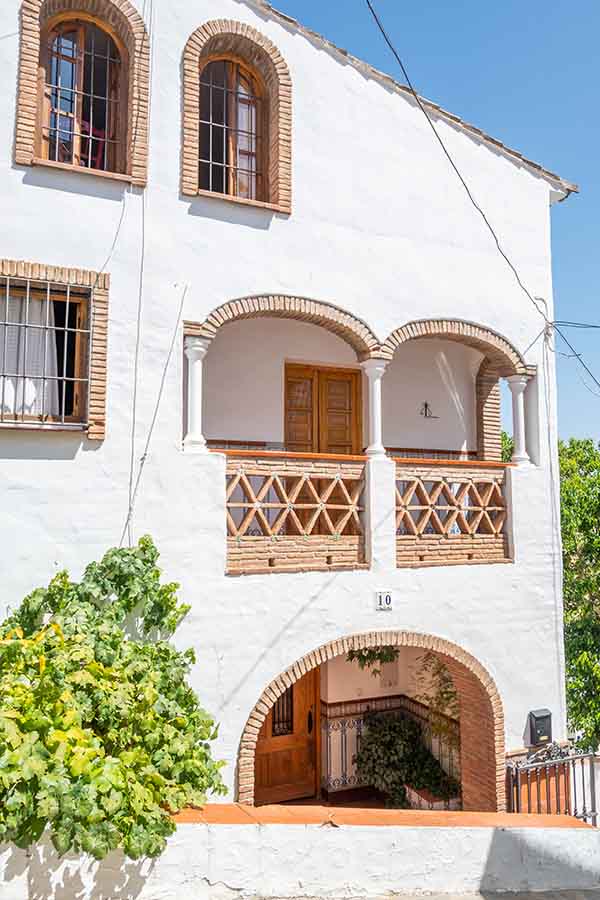
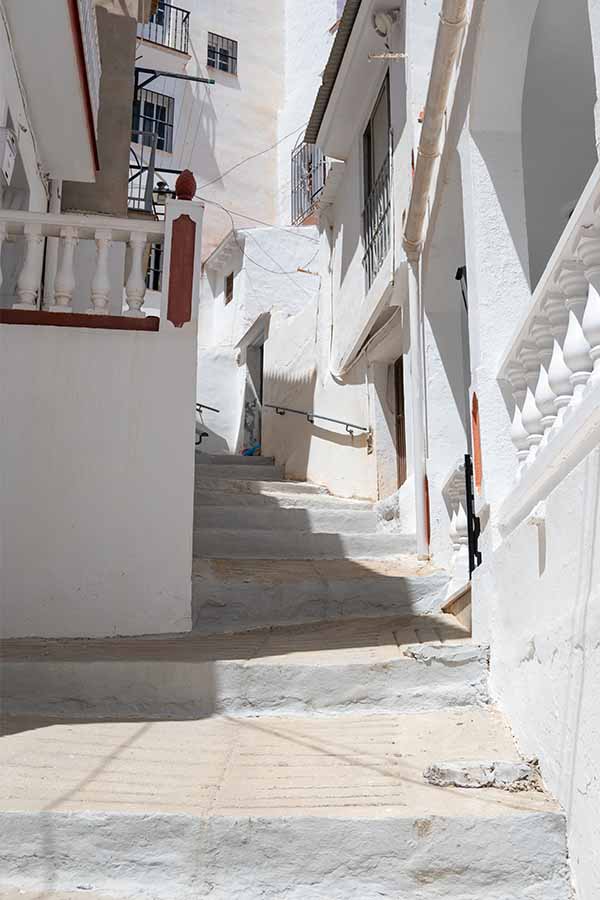
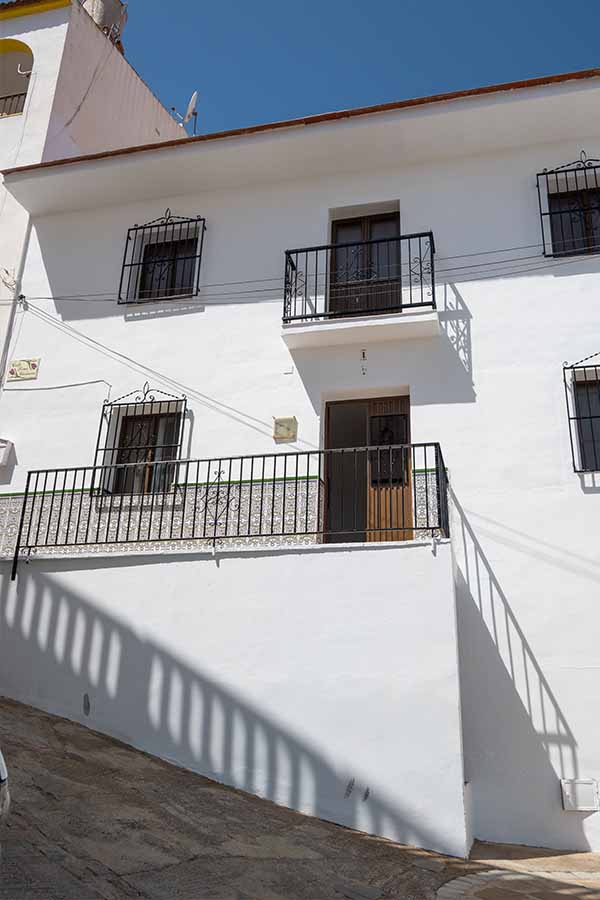
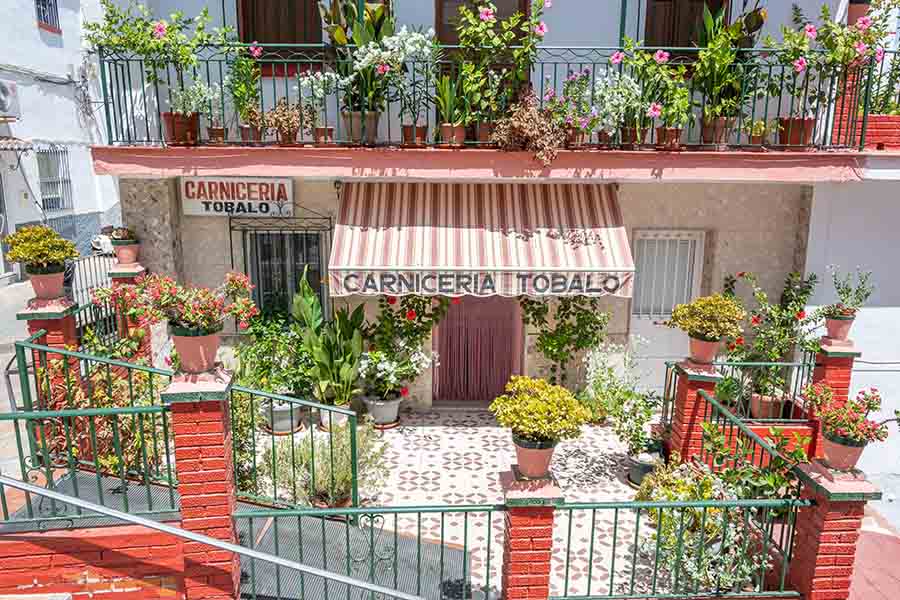
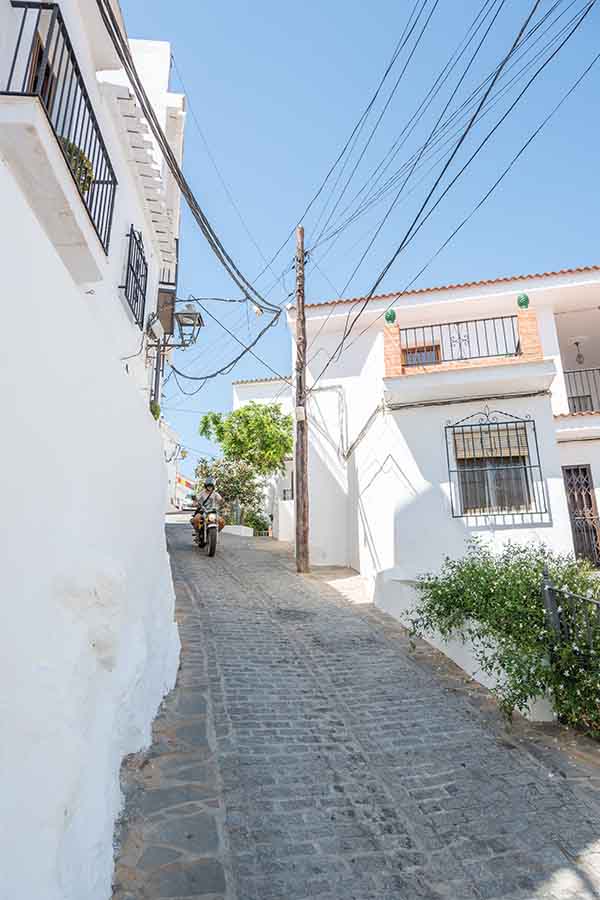
There is something quiet and authentically harmonious about this village, just as there is in many other white villages of Andalusia. Slowly passing all the steep turns of the winding road to Almáchar, you arrive in an oasis of peaceful hills, where getting to the central square means climbing up the sloping streets (which is quite a workout, so be ready!). From the very first minutes, this physically demanding walk makes you think about everyday life in the village, where these steep climbs and descents are simply part of the routine. What looks romantic and peaceful to a traveller can actually be an exhausting part of everyday life for the people who live here. As a traveller, photographer and seeker of stories, I found this difference attractive and curious.
It was a hot August day when we visited, and there were very few people on the streets. As we slowly made way uphill, stopping now and then to catch our breath and look around, I started imagining what it must be like to make these same climbs and descents every day. I realised a long time ago that differences in lifestyle easily awaken my curiosityand often stay with me long after the trip. There is a kind of remote happiness here, a peacefulness that you somehow have to earn by climbing into the hills.
At some point, while taking a break during my walk through the streets of Almáchar and looking around, it almost feels like time has stopped. Then you turn another corner and suddenly see the central square, filled with lively conversations coming from the tapas bars, and you realise that life is very much happening here. It just doesn’t look like the kind of active life we, travellers from the noisy world of big cities and capitalism, are used to seeing. Our idea of an active life is often connected with financial growth, earning more, having more opportunities, new technologies and new discoveries. We are always running towards something new and modern, trying to move faster than the flow of life itself.
In Almáchar, I felt another direction. Life seemed to move more naturally, and people seemed to live with this flow rather than trying to get ahead of it. While we were there, we tried to join it too, although my backpack full of photography equipment was constantly trying to slow me down.
Maybe this is what I find so interesting about the white villages in Spain. They are beautiful, of course, but there is more to them than whitewashed houses and picturesque streets. The villages of Spain that are tucked away in the Andalusian hills can give you a small glimpse into a completely different way of living. Almáchar probably isn’t the first place people think about when looking for the best small towns in Spain.
There is something nice about walking through a village where you don’t feel that every street and every corner exists for tourists.
Among the white villages of Andalucia, Almáchar has its own character. It is small, steep, quiet and closely connected to the landscape around it (like in my photo print “Tree of Connection”). You are also seeing how the houses, the hills, the streets and the everyday life of the people somehow fit together. This is what makes travelling through the Andalusian white villages so interesting to me.
A Note about History of Almáchar white village in Spain
Almáchar is one of the white villages in Spain, located in the hills of the Axarquía region of Málaga. Like many of the Andalusian white villages, it is surrounded by hills, vineyards and traditional agricultural landscapes, with whitewashed houses climbing up the slopes. The village has Arabic origins, which can still be felt in the narrow, winding streets and in the way the houses follow the shape of the hills. Even the name Almáchar comes from Arabic, from Maysar or Machar, meaning something like “the meadows” or “land of meadows”. Almáchar was also one of the so-called Four Villages, together with Cútar, El Borge and Moclinejo, which lived under the protection of the castle of Comares.
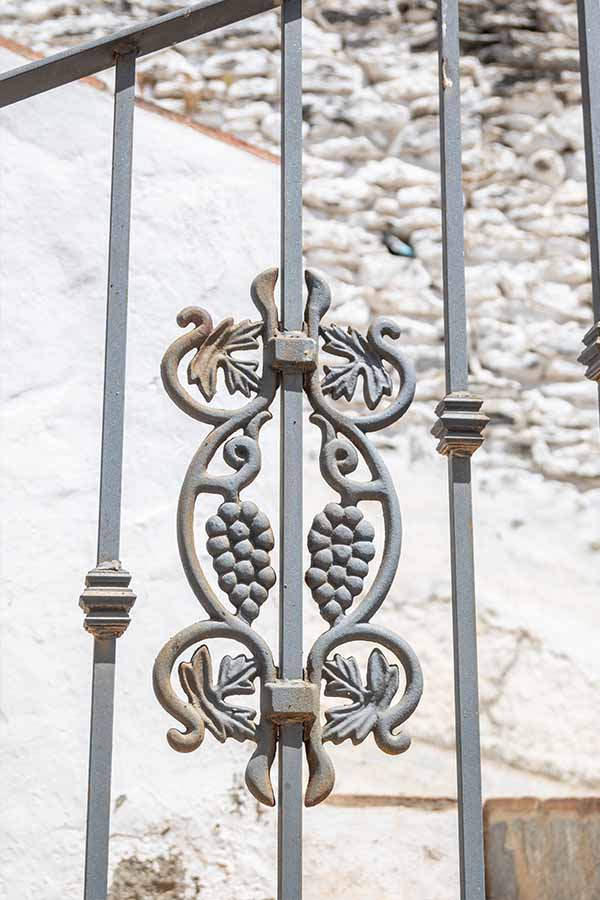
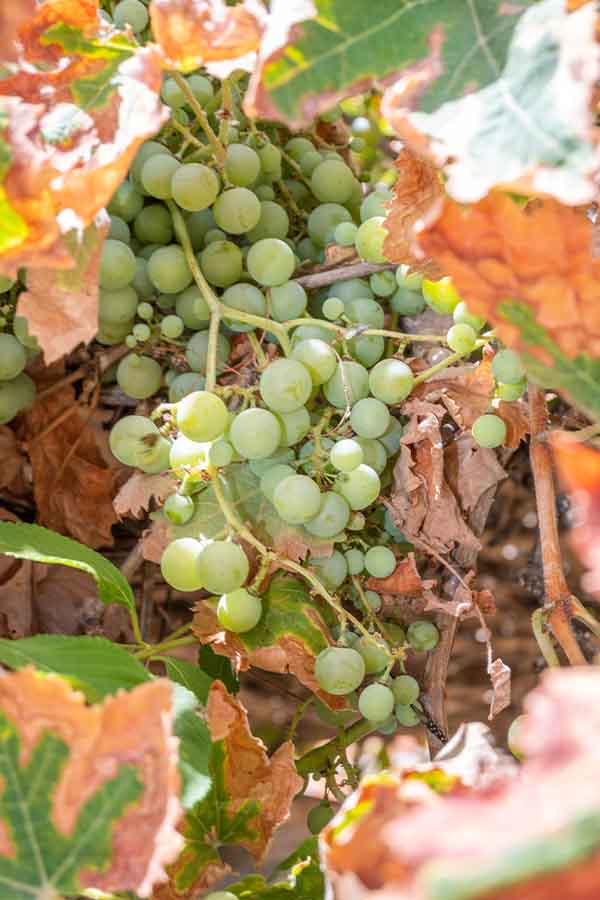
The history of the village is also very closely connected with grapes and raisins. The surrounding landscape is full of vineyards and traditional paseros, the structures where Moscatel grapes are laid out to dry in the sun and become raisins. This tradition has shaped the agriculture of the area and the way people lived and worked here for generations. By the 19th century, Málaga raisins had become an important export product and were even considered a luxury in some European markets. Today, the traditional production of uva pasa is recognised as part of the important agricultural heritage of the Axarquía.
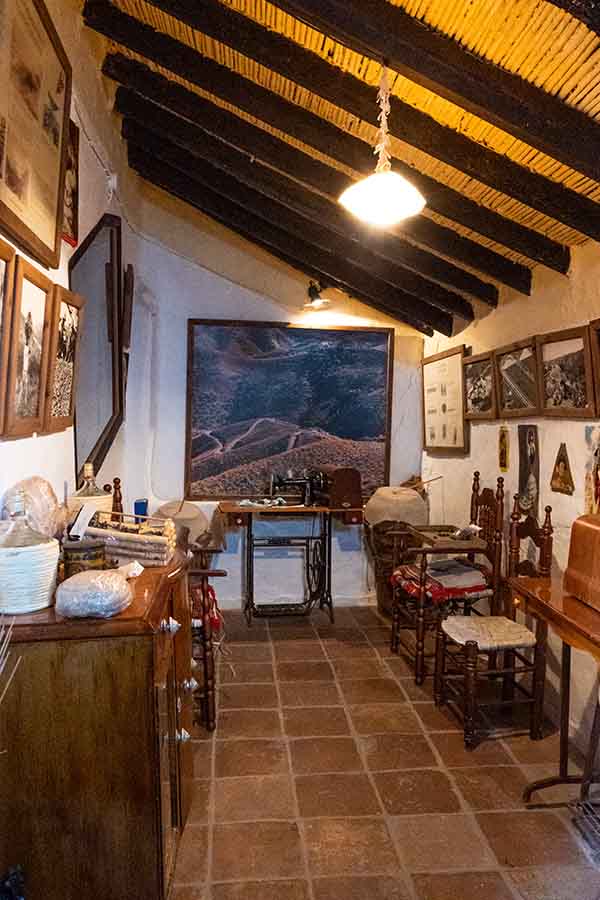
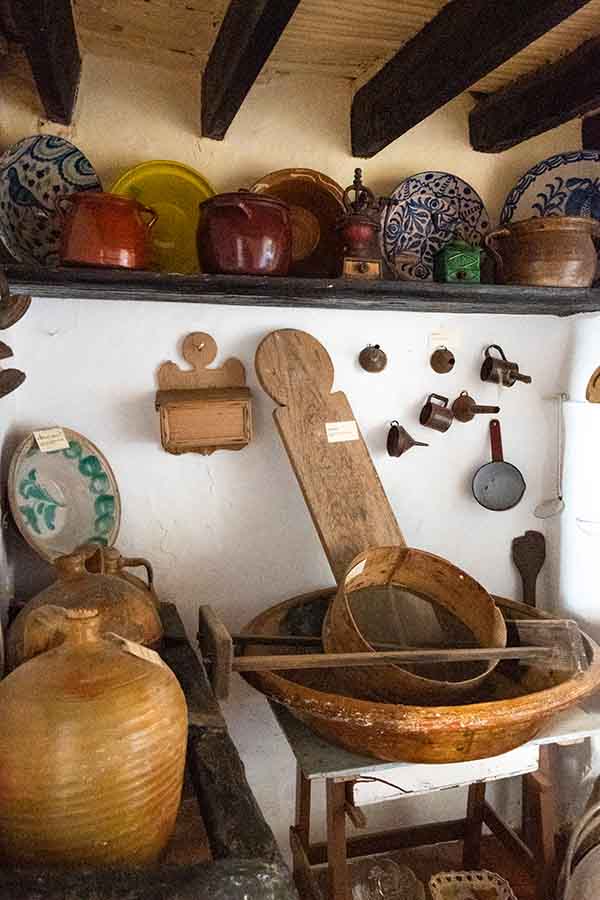
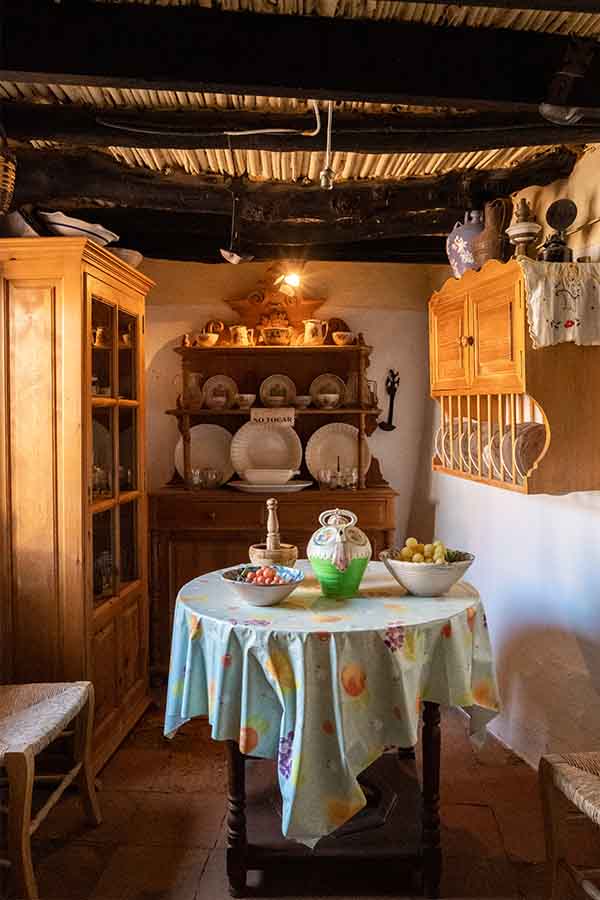
There have also been some difficult moments in the village’s history. In 1755, a series of earthquakes forced people to leave their homes and take refuge in the countryside. Somehow, when you walk through Almáchar today, with its steep streets and houses built into the hills, these layers of history make the village feel even more interesting. It is not simply one of the white villages of Andalucia that looks beautiful in photos. There is a long agricultural and cultural history behind those white walls and the Museo de la Pasa is probably one of the best places to understand it. Located in an old house, the museum preserves traditional tools and objects connected with raisin production and rural life, giving you a much more tangible idea of how people here lived and worked.
Things to Do in Almáchar, Andalucia
There are several interesting things to see and do in Almáchar, especially if you enjoy small villages where the experience is more about walking, looking around and noticing the little details than following a long list of tourist attractions. After learning a little about the history of the village, the first place I would recommend visiting is the Museo de la Pasa.
Visit the Museo de la Pasa
The Museo de la Pasa is probably the best place to start if you want to understand Almáchar and the landscape around it. The history of the village is closely connected with grape growing and the traditional production of raisins, and the museum gives you a glimpse into this part of local life. It is a small family museum and that is actually part of its charm. You can see the traditional tools and objects connected with raisin production and get a better idea of how this work was once part of everyday life in the village. After visiting the museum, it is much easier to look at the vineyards and paseros around Almáchar and understand that they are important part of the lifestyle in this area. The opening hours: Saturday 11an -2 pm, 6pm-8pm Sunday 11-2pm
Walk Around the Casco Antiguo
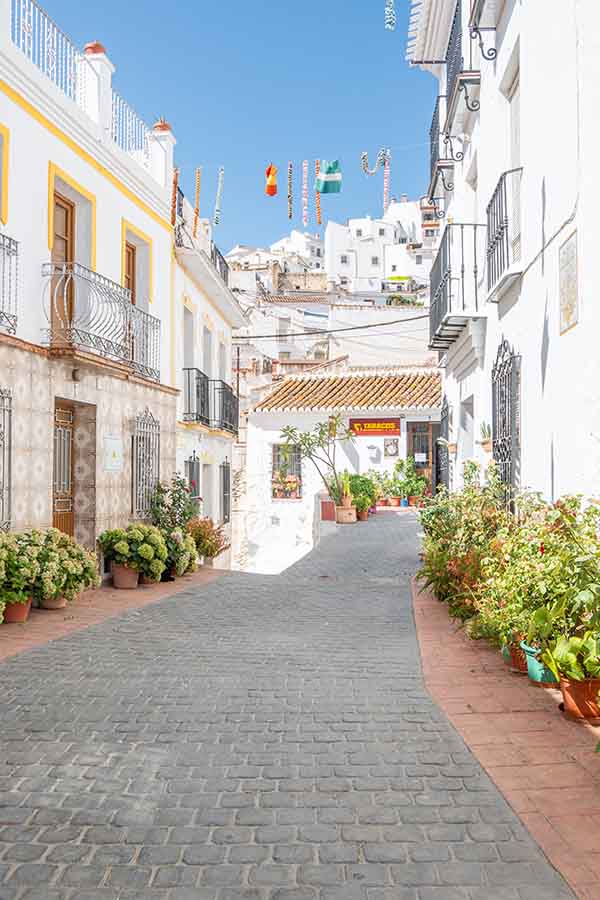
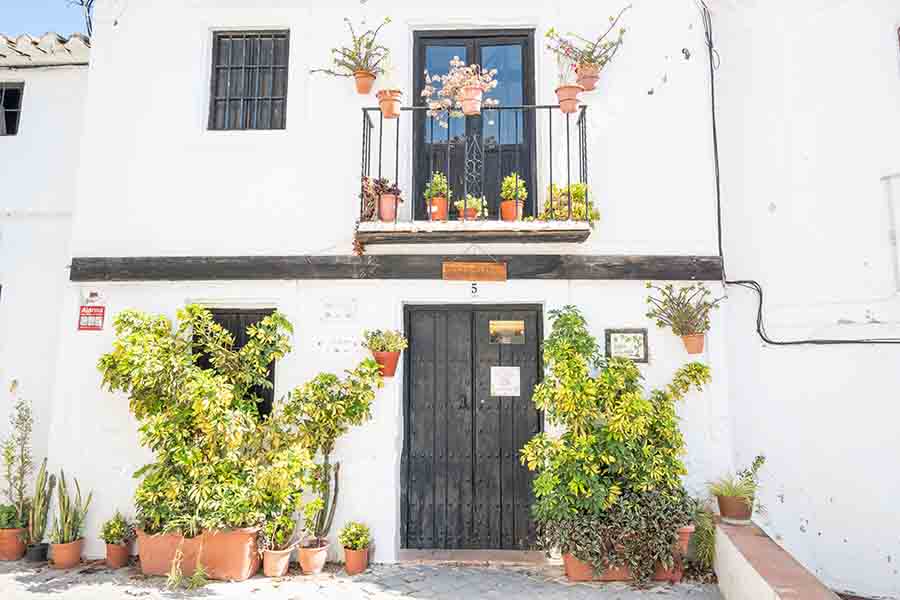
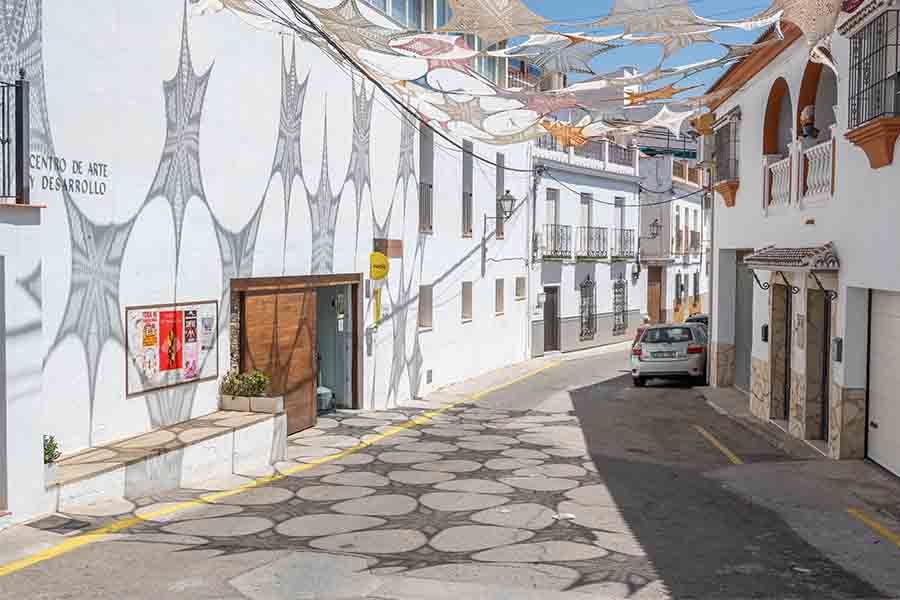
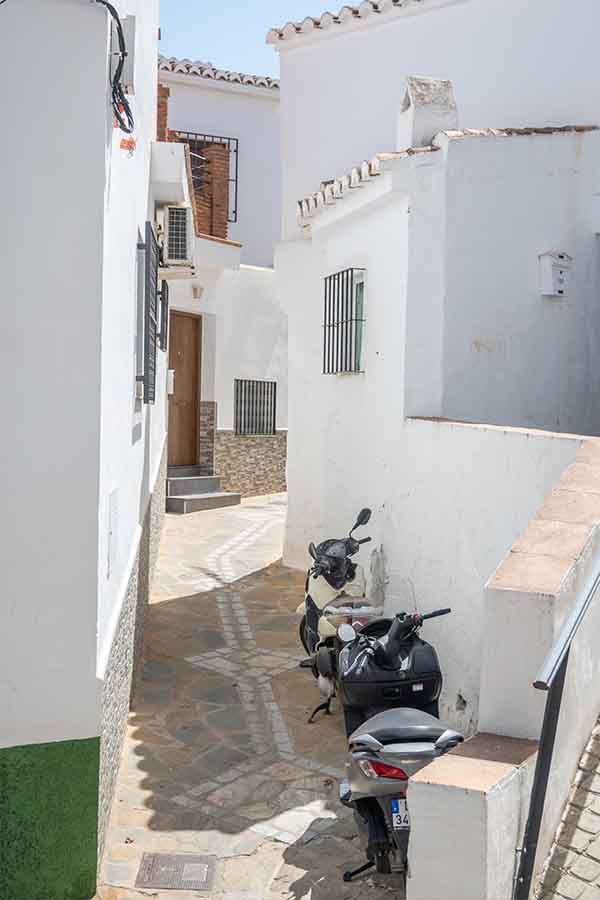
The Casco Antiguo, or old town, is probably where you will spend most of your time anyway. The streets are narrow, steep and sometimes surprisingly quiet, with white houses, little corners and views appearing when you least expect them. One of the streets worth looking for is Calle de Mártires, one of the characteristic streets of the old part of Almáchar and a good place for a little photographic walk. I found that simply wandering without a specific destination was one of the nicest things to do here.
Look for the Traditional Paseros
The landscape around Almáchar is closely connected with vineyards and the traditional paseros, where grapes are laid out to dry in the sun and eventually become raisins. Once you know the story behind them, you start noticing these structures and the vineyards around the village differently. This is also one of the reasons I think Almáchar is interesting for anyone exploring the white villages of Andalusia.
See the Iglesia de San Mateo
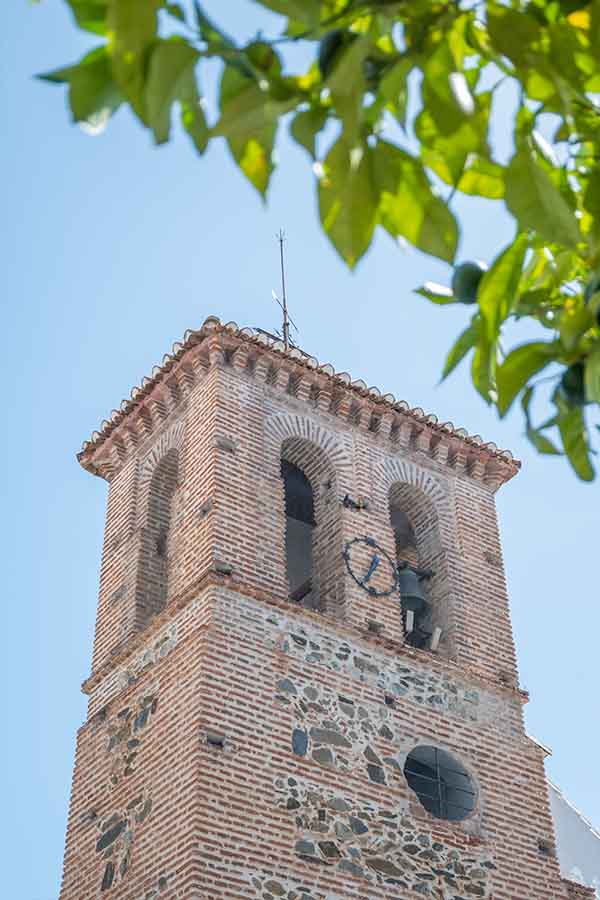
The Iglesia de San Mateo is another historical place to add to your walk around Almáchar. The parish was established in 1505, and the church itself was built in the 16th century. It has three naves separated by columns and pointed arches.
Look for the Little Corners of Almáchar
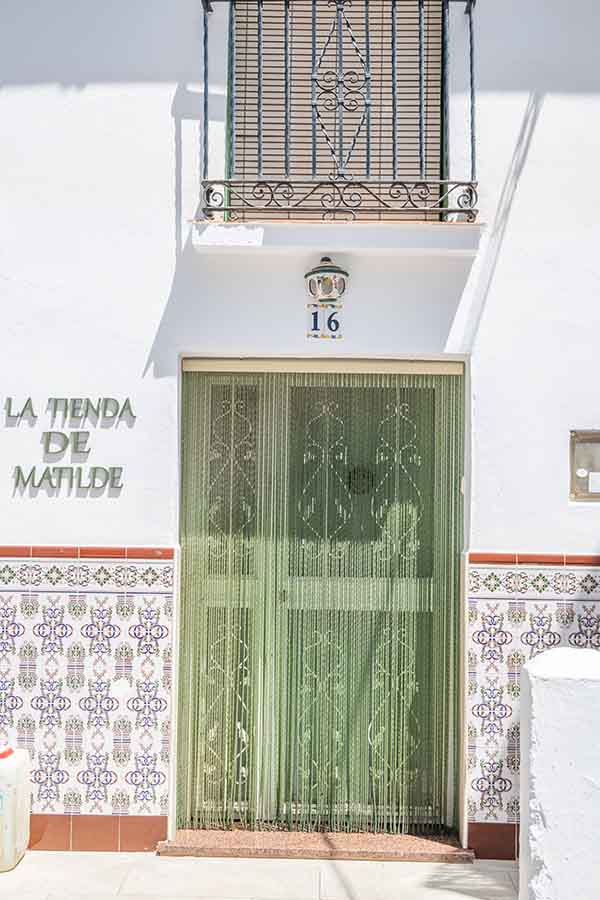
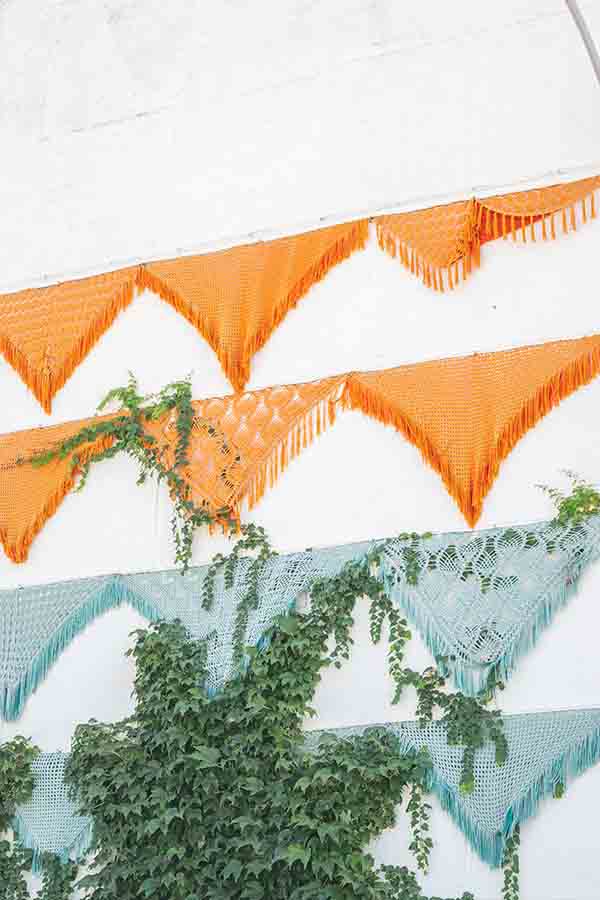
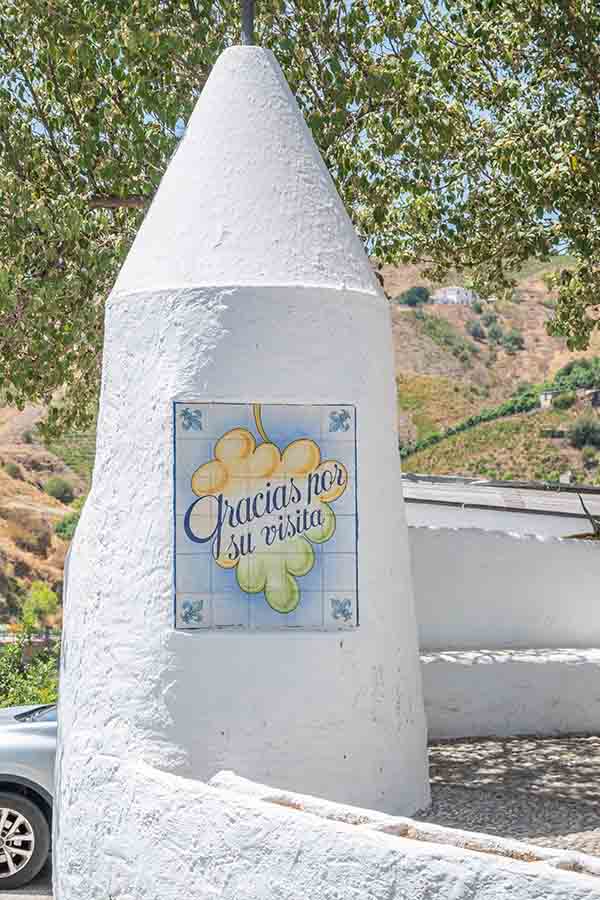
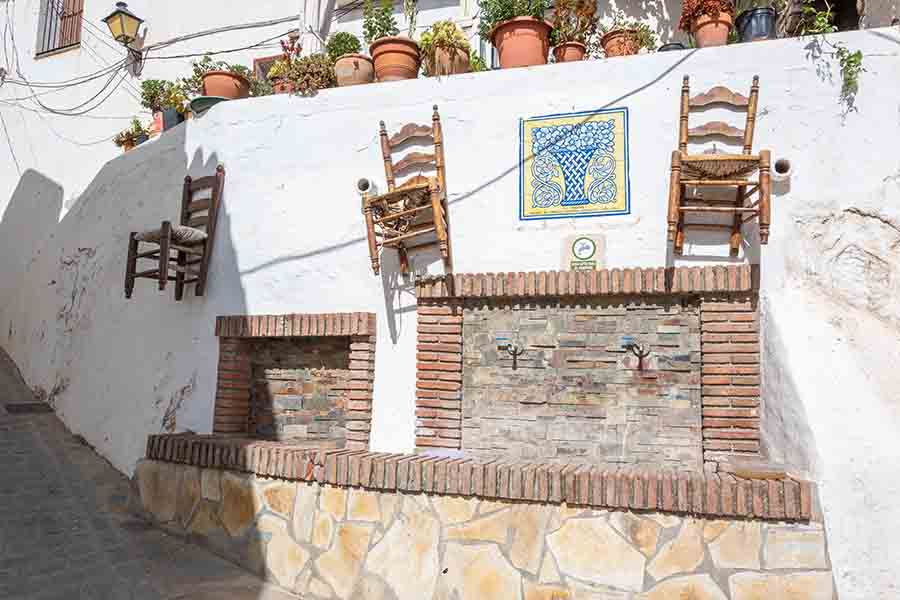
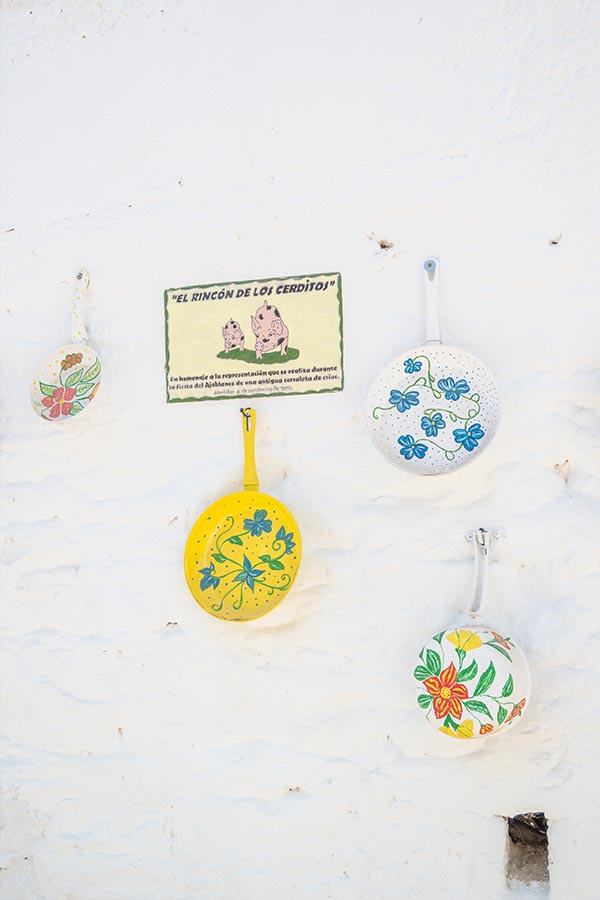
One of my favourite things about walking through white villages in Spain is finding small details that may not even appear on a typical list of attractions. Almáchar has several of these little corners, including a historic white tunnel covered with trees, small shaded spaces decorated with crochet work, and unexpected views between the houses. There are also places such as the Cueva del Moro and the Jardines de El Forfe to look for if you have more time. None of these places needs to take hours to visit. They are more about slowing down, walking around and seeing what you find – which, honestly, is probably the best way to experience one of the quieter Andalusian white villages.
How to Get to Almáchar
Almáchar is around 32 km from Málaga by road, and the easiest way to reach the village is by car. The drive takes roughly 40 minutes, depending on traffic, and the road becomes increasingly winding as you get closer to the hills of the Axarquía. The journey itself is part of the experience, with views over the surrounding countryside and vineyards along the way.
If you are travelling without a car, it is also possible to reach Almáchar by bus from Málaga, although you will usually need to change buses. Current routes connect Málaga with Almáchar via Rincón de la Victoria, with the total journey taking around two hours or more depending on the connection. It is worth checking the latest timetable before setting off, as services are limited.
Once you arrive, the best way to explore Almáchar is on foot. The village is small, but be prepared for plenty of steep streets and stairs, comfortable shoesare definitely a good idea!
All images in this article were taken by Elena Sullivan, ArsVie Photo Studio and are protected by copyright. If you are interested in using any of the them, please contact me for permission. Thank you for understanding!
Spain Relocation Quiz
Dreaming of living in Spain? Discover which part of the country fits your rhythm, values, and lifestyle.
Hi, there! I’m Elena Sullivan, a fine art photographer, and creative adventurer. My first joyful experimentation with a camera extended into a passionate relationship where harmony represents a constant flow of elegant devotion. I follow my intuition and curiosity in search of eternal connections in nature, then use my camera to reveal it and share it with you! Every of my photo is curated with love and artistic excellence.