When you move to a new country where you don’t speak the language, your eyes and ears seem to become more sensitive. Suddenly, everything around you is new, and so much of it feels unfamiliar that your brain works at full speed, trying to process all these new impressions. Maybe that is why, during my first year living in Mexico, I felt much more tired than usual. Everyday life in a different language can be exhausting in a way that is difficult to explain. And there is not really a break from it, because every day you have to get used to something new – a different route, a new form of transportation, the way people communicate, their gestures and body language, and all the little things that you once did without even thinking about them.
For at least the first year, you experience a serious cultural shock. It feels as if you are constantly learning how the world works again: where to buy food, where to find something for your home or a medicine you need, where to make a photocopy or withdraw money, how to get the right document, how to make new friends, and, of course, how to understand the language itself. As exhausting as this process can be, it also changes the way you see the world. Every day adds something new to your personal picture of it. You begin to notice details that you might have overlooked before and all of these experiences inevitably find their way into my professional life and my creative work, which, for me, means writing and photography. Perhaps this is one of the reasons photography has always felt so natural to me. A photo doesn’t require me to explain everything in words. It becomes its own visual language – a way of observing, understanding and communicating with the world, even when I don’t have the right words.
A photo is worth a thousand words
Photography has always felt like something much deeper than an art form. It is a way of capturing reality, but at the same time, it is also a kind of escape from it. When I look through the camera and concentrate, I see a moment without the noise of everything around me. It doesn’t matter what language the people around me are speaking, or even what language I am thinking in at the moment when I hold the camera. Photography is intuition, a harmonious dialogue between the physical body and what exists within us.Some people call it the soul, others the heart, and others the spirit.
Everything that has accumulated in your consciousness creates a physical reflex that, through the movement of your body and fingers, invites you to press the shutterat the moment that feels right to you. That moment, captured forever in a photo, can find a response in the people who see it and feel something when they look at it. They see it with their eyes and feel it with their hearts. No language is needed. Thousands of words could never replace the sight of the sun disappearing beyond the horizon, or the magic of those golden (like in “Sunset Glow”), pink, blue and violet colours that fill the space at that particular moment.
Somehow, millions of people around the world, speaking completely different languages, English, French, Spanish, Chinese, German, etc. admire photos of sunsets and beautiful landscapes. They don’t need a translation to understand what they are seeing. That is why it is called a visual language. It speaks through images, shapes, outlines, colours and light. You see it and understand whether you like it or not. Any photo can be accompanied by dozens of beautiful and wise words, but those words cannot make someone love a photo if the person looking at it does not feel a connection with what is being shown. Photography speaks through a visual language that is understood on an emotional level.
Photography as a universal visual language
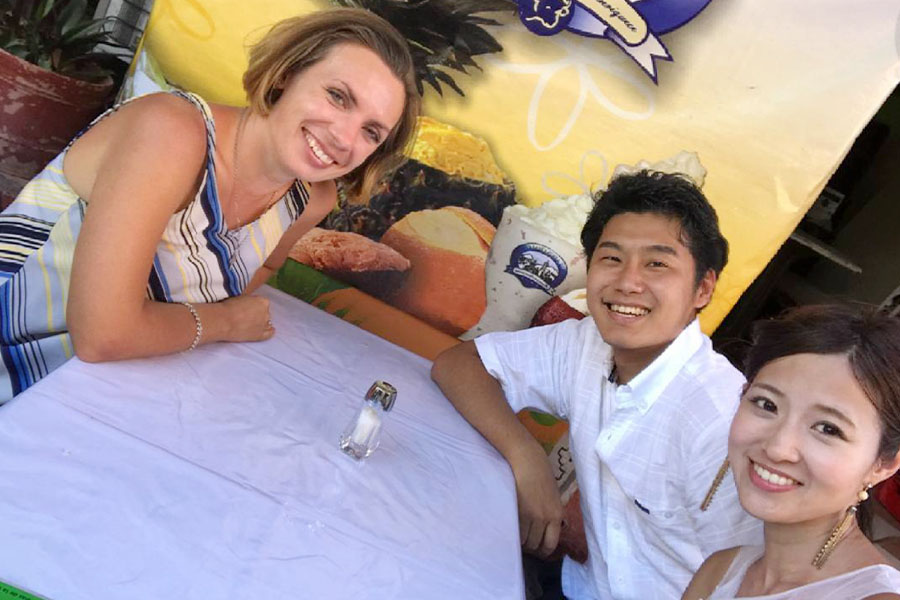
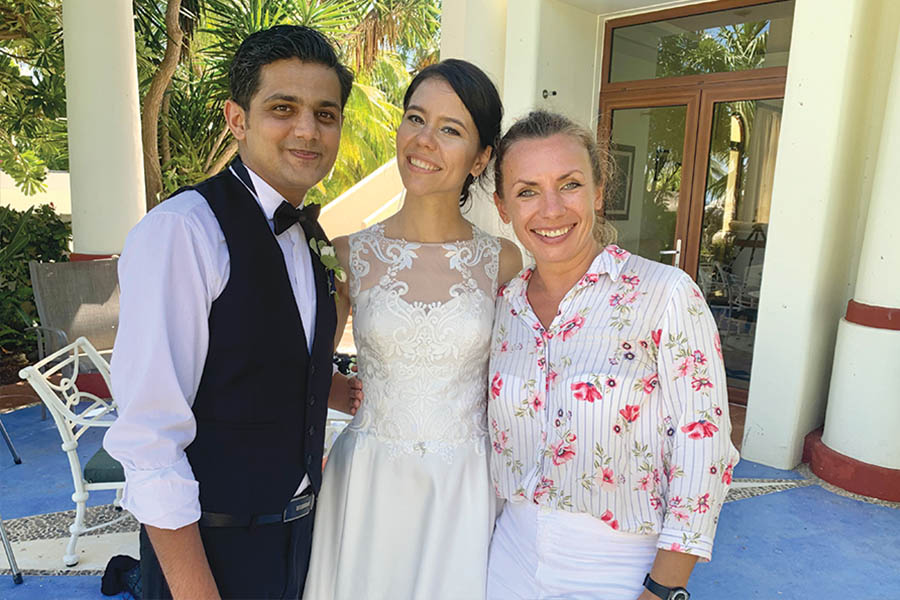
While living in Mexico (9 years), I have done photoshoots for couples from Japan, Brazil, United Arab Emirates, India, where none of us had a common language to communicate in. Body language helped me explain how I wanted them to pose, but the real question is: how did they choose me as their photographer?
I think because photography, like any other visual art, speaks an international language – the language of feelings which is universal. You look at a photo and see it with your eyes and you feel with your heart. A description of a photo can be translated using an online translator, but feelings cannot. They have only one way of being transmitted and understood.
Ever since my parents took me to English language classes when I was five years old and I began learning English, something in my life changed. It was as if a door had opened into a new way of thinking. When you know even one additional language, you double your space for action, communication and understanding yourself in this world. Today, I speak three languages every day, but when it comes to photography, everything still comes down to feelings and the sense that a particular moment is right.Theory and the practical knowledge based on it are also necessary, of course, but that is the more technical side of photography.
Photographic style is created through using many different elements: the angle of the shot, composition, light and countless other details that the photographer consciously chooses. The viewer may not analyze or even notice all of these elements, but they can still feel their effect on an emotional level. Simply put, you may not know why you like a photo, but you feel that you do.
You probably know the phrase, “A picture is worth a thousand words,” which was popularized by advertising executive Fred R. Barnard. I would add that those thousand words can be spoken in hundreds of different languages, yet a photo needs no translator. It speaks through images, light, colour and emotion – a visual language that can cross borders without a single word.
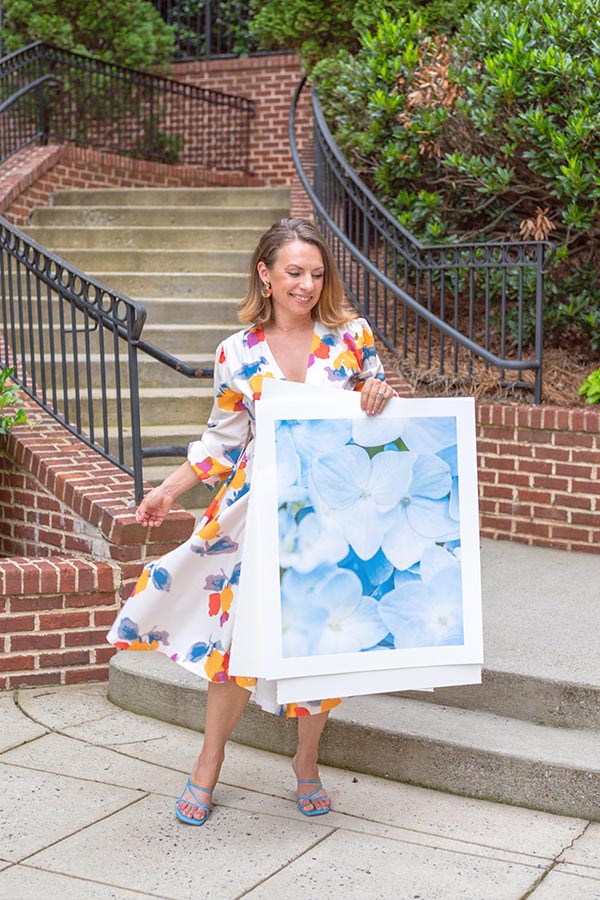
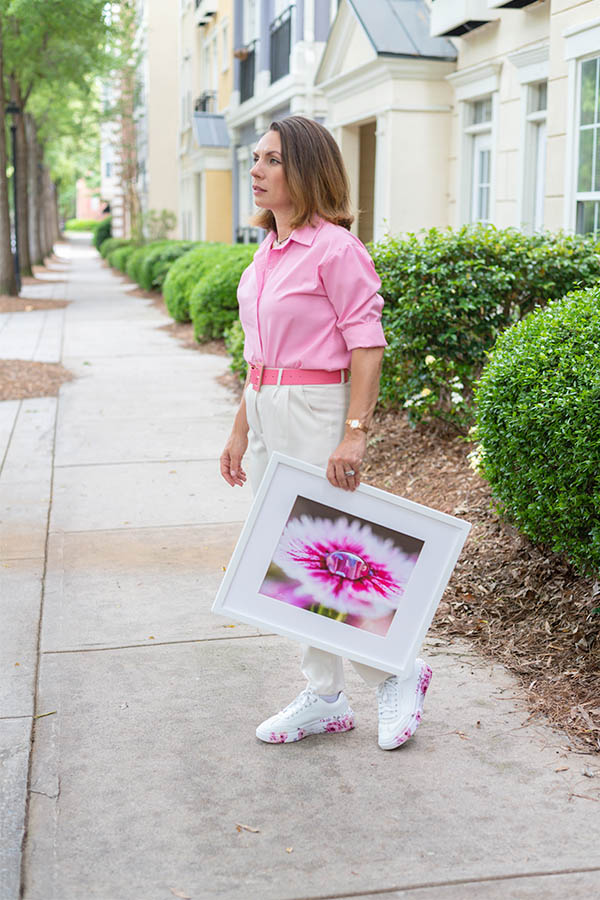
All images in this article were taken by Elena Sullivan, ArsVie Photo Studio and are protected by copyright. If you are interested in using any of the them, please contact me for permission. Thank you for understanding!
Add elegance to your space with beautiful wall art prints
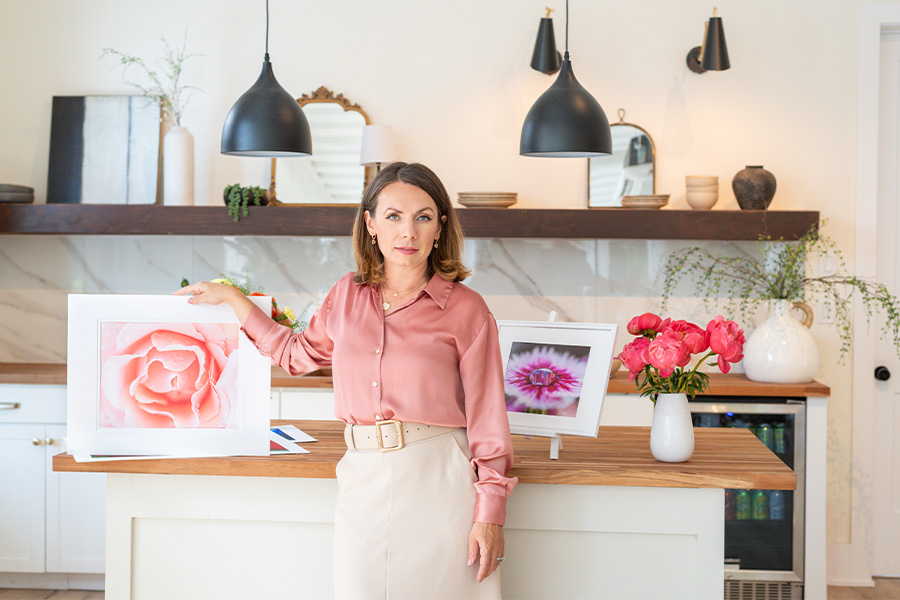
Hi, there! I’m Elena Sullivan, a fine art photographer, and creative adventurer. My first joyful experimentation with a camera extended into a passionate relationship where harmony represents a constant flow of elegant devotion. I follow my intuition and curiosity in search of eternal connections in nature, then use my camera to reveal it and share it with you! Every of my photo is curated with love and artistic excellence.