Like many interesting and adventurous stories, this one began with a single intention and unfolded into something much richer.
On a cloudy day, I walked into downtown Marbella with one clear plan – to visit the Archivo Histórico Municipal de Marbella. According to the information I found online, it was located inside the Centro Cultural Cortijo Miraflores. I working on an article about one of Marbella’s old buildings and hoped to find books, documents, or photographs that might be available for public use.
While I didn’t get to view archival materials that day, I did gather enough information to continue my research later. My visit had already served its purpose, and I was almost ready to leave.
Almost.
As I walked toward the exit, a small table tucked into the corner of the hallway caught my eye. Beneath a glass cover lay a few books and objects, quietly waiting to be noticed. Curious, I asked the kind woman at the reception desk, who had already patiently answered several of my questions, what it was.
I had arrived expecting to spend no more than ten minutes in the building.
Her answer changed that completely.
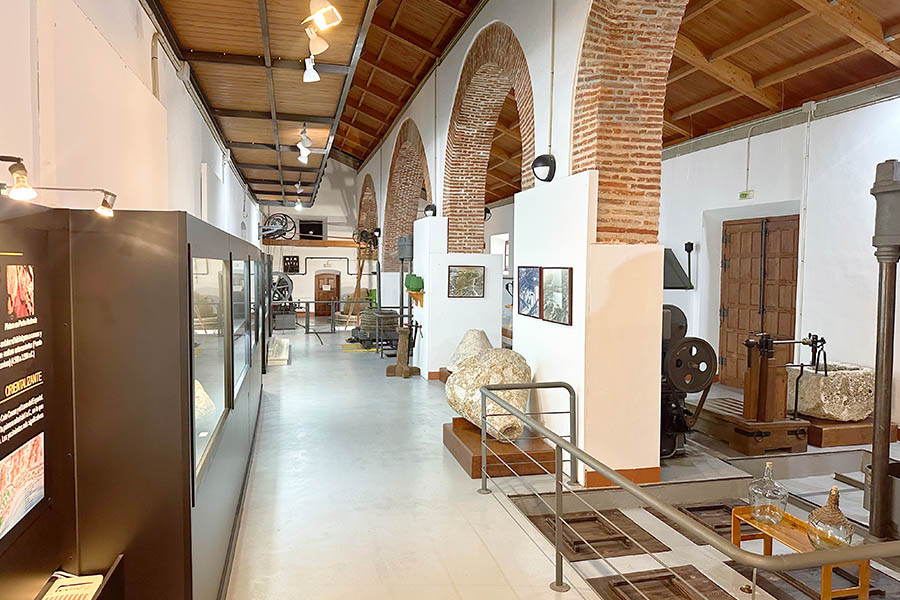
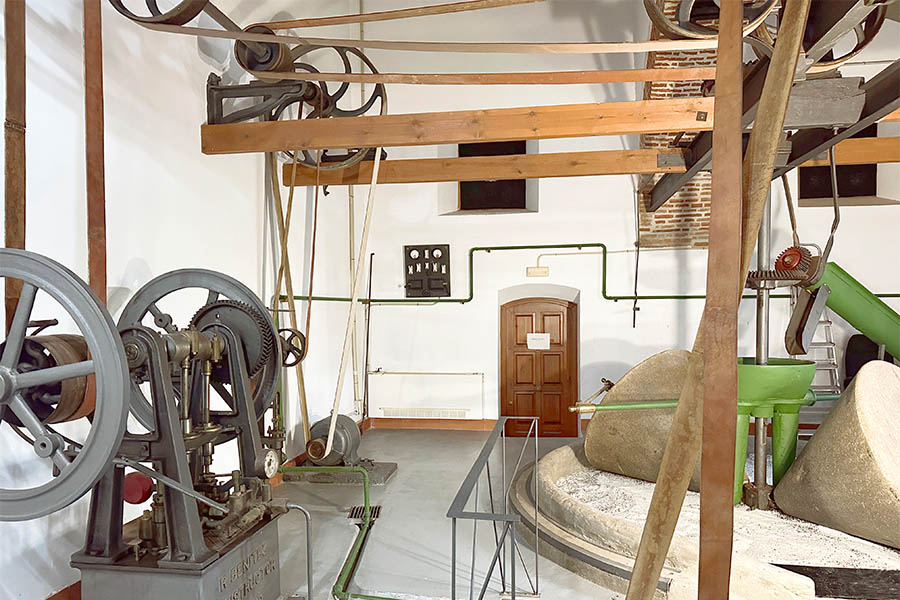
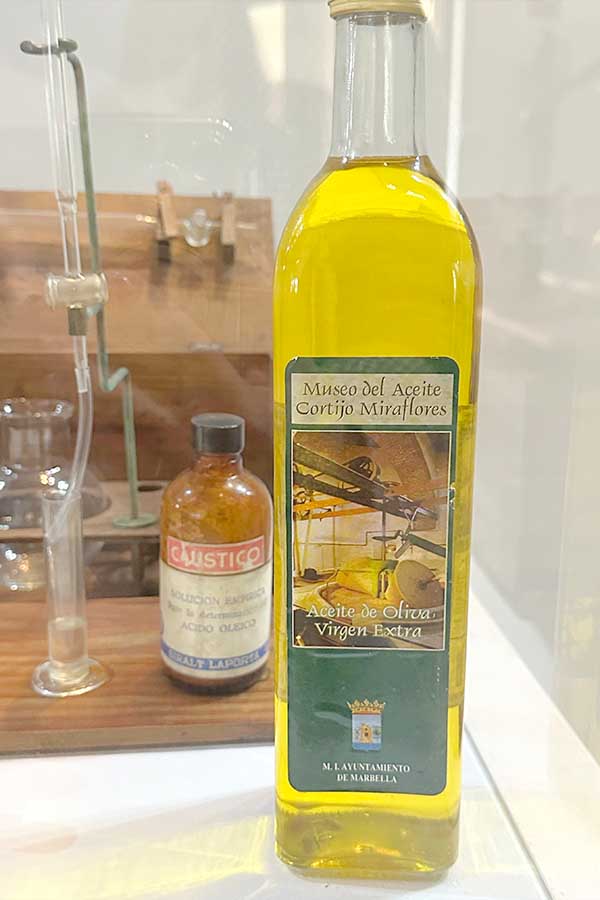
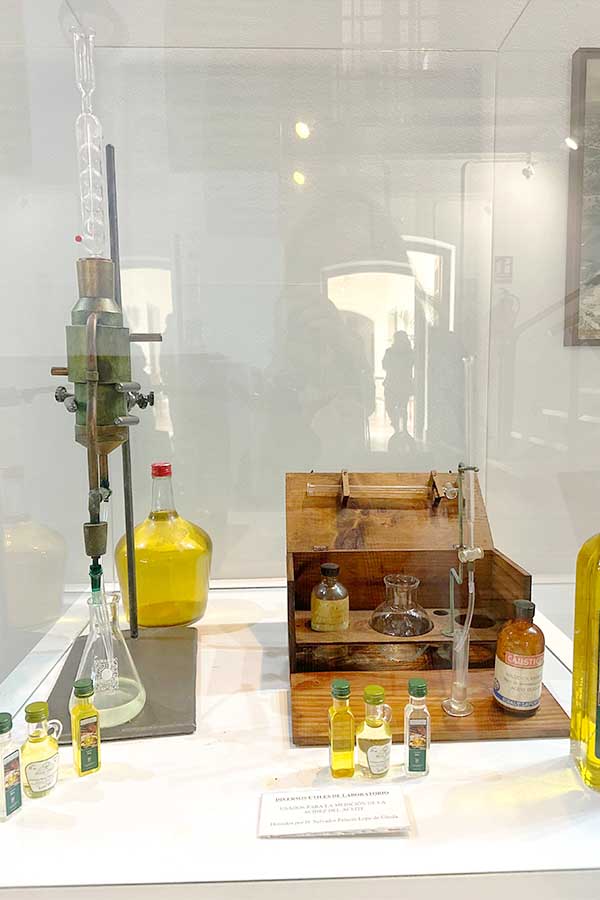
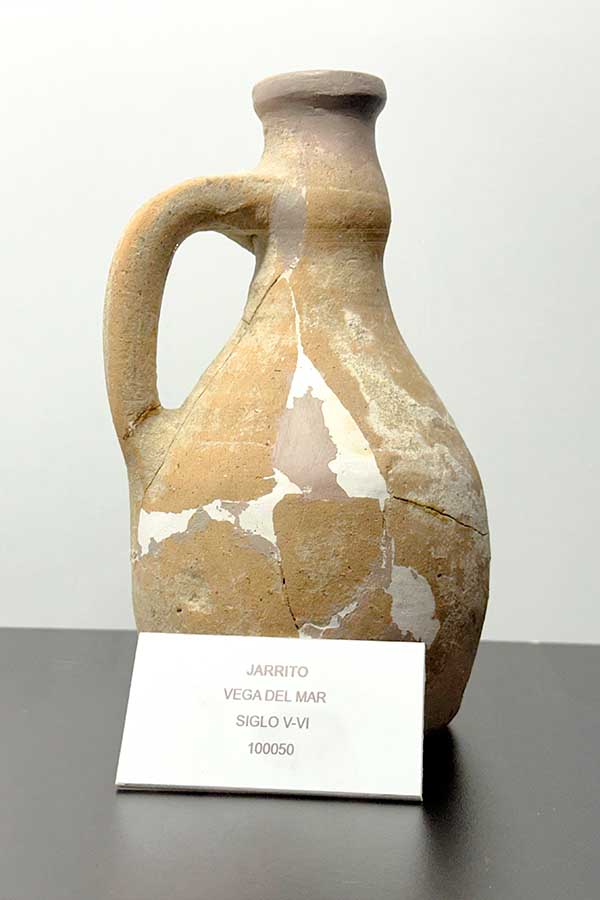
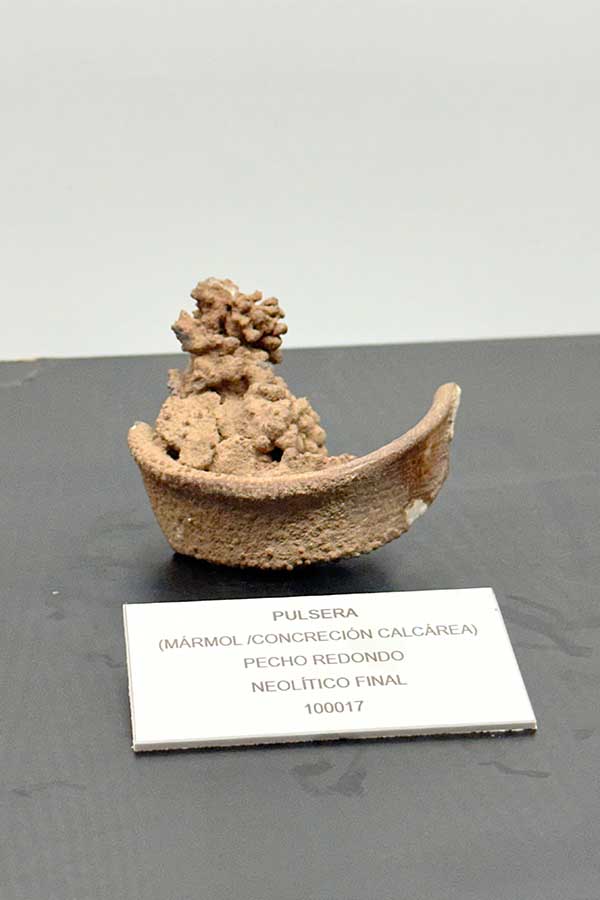
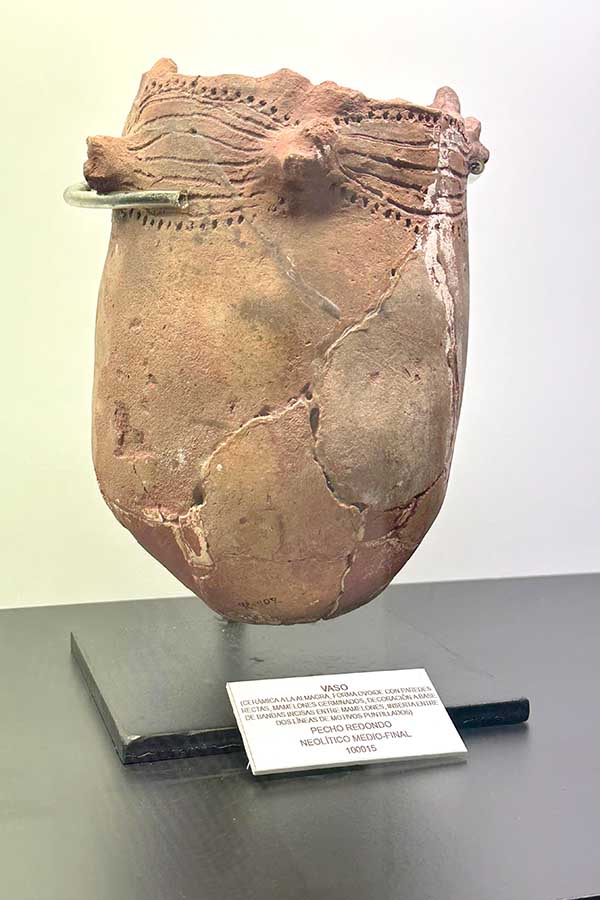
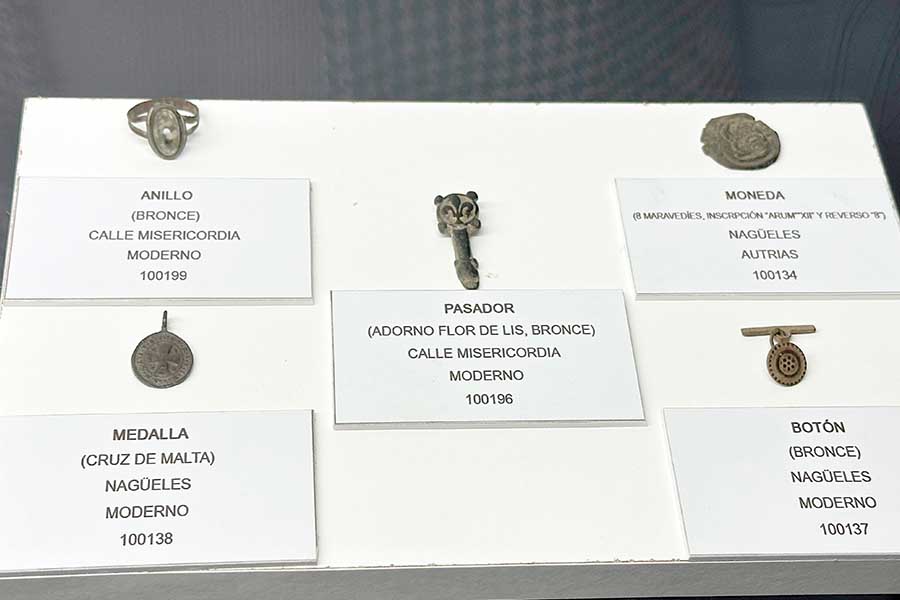
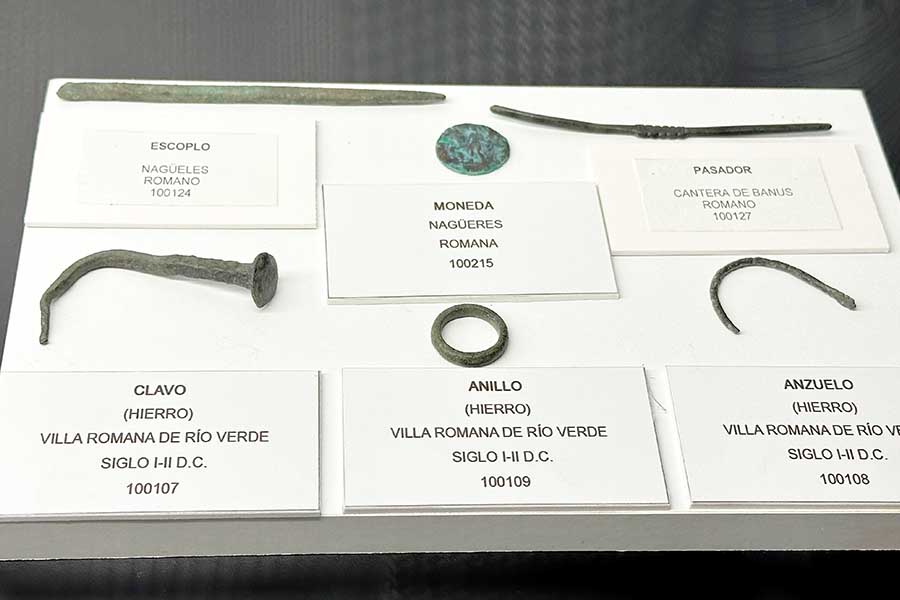
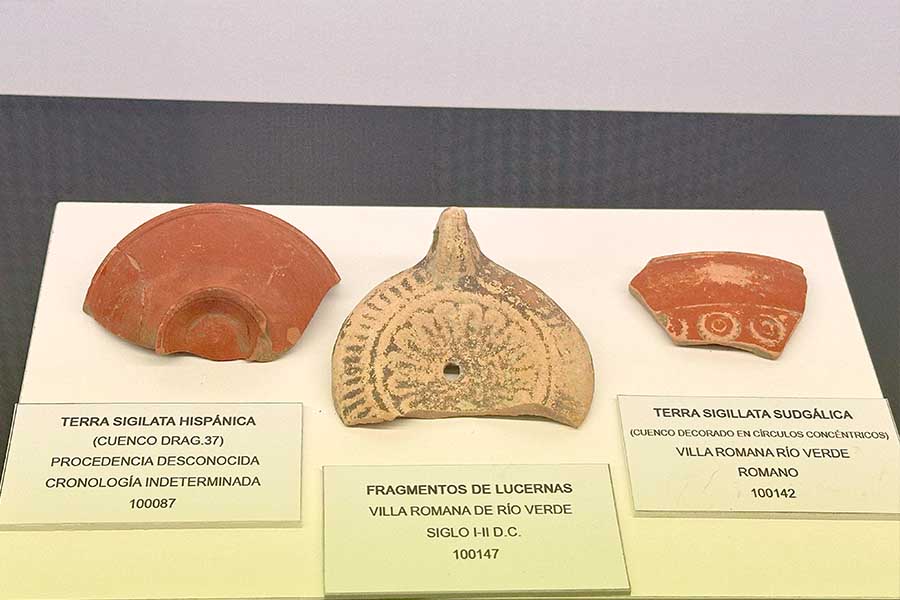
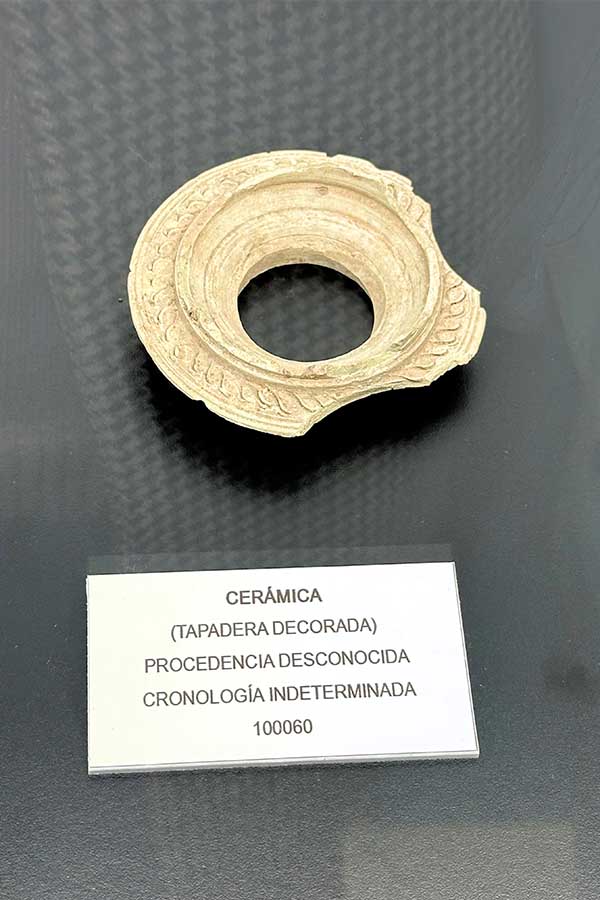
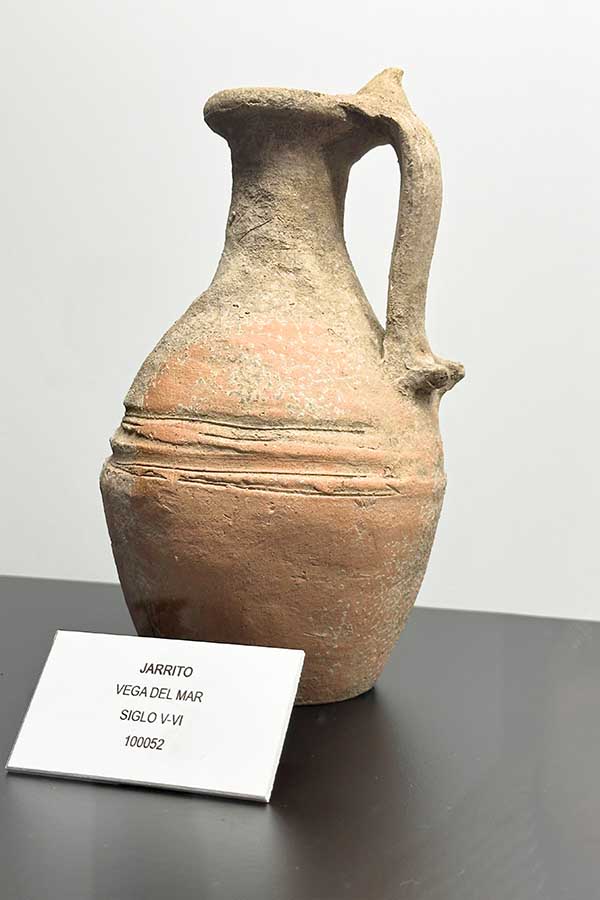
What followed was nearly an hour of unexpected exploration and warm conversation with the people who work there. Instead of leaving, I found myself drawn into a small but thoughtful exhibition dedicated to olive oil production and archaeological finds from the Marbella area, some dating back to BC times.
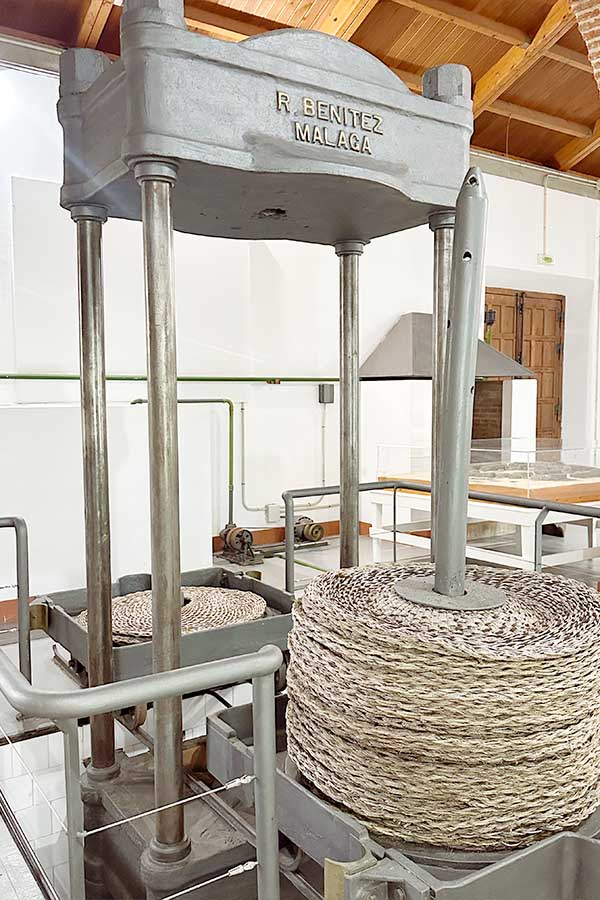
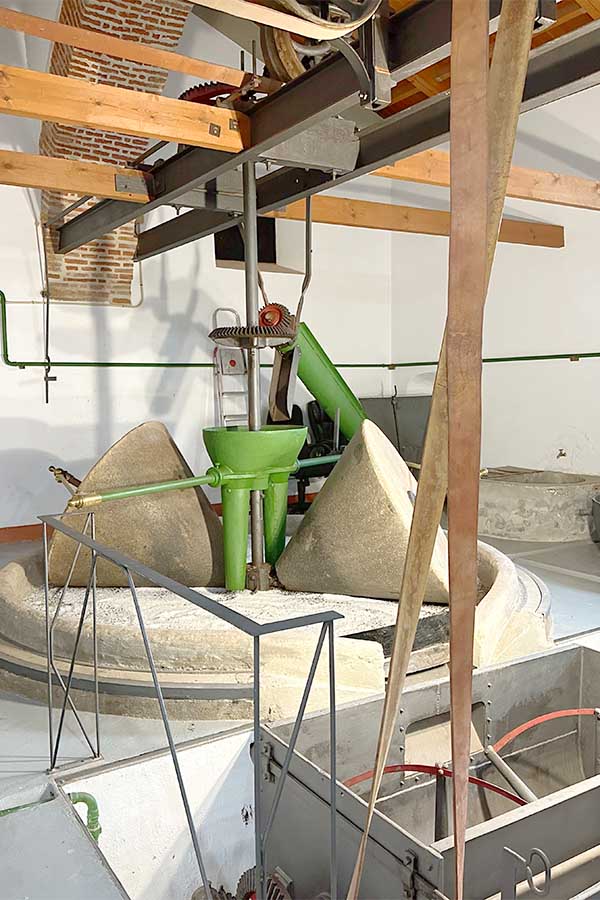
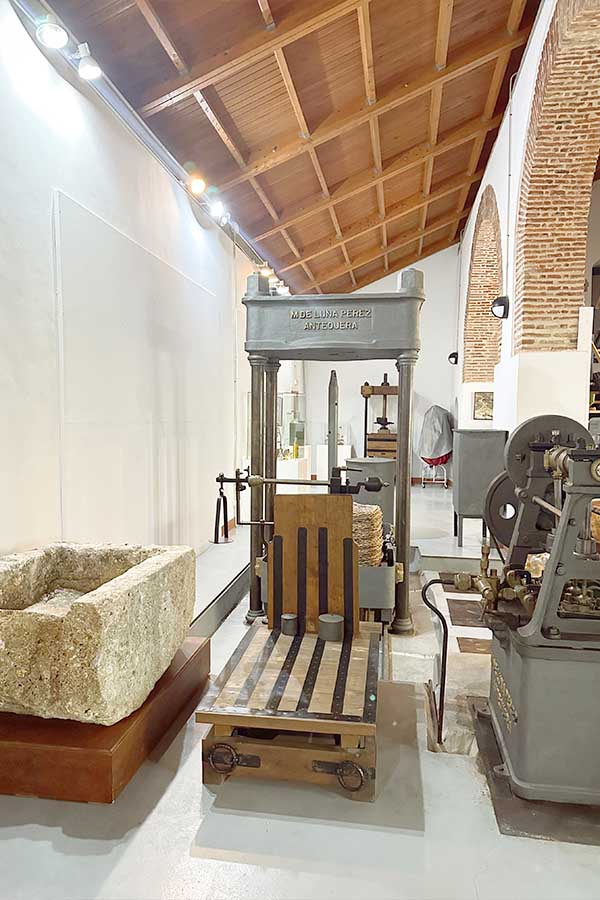
The exhibition offers a quiet glimpse into the agricultural and cultural history of the region. Tools, objects, and machinery from the past century or two reveal how olive oil production shaped everyday life over generations. The artifacts are presented with care and simplicity, inviting visitors to slow downand take a closer look. What makes this place special is its intimacy. It doesn’t announce itself loudly, and perhaps that’s why it feels so genuine.
Standing in this single, modest hall, it becomes clear that the exhibition holds more than one story at once.
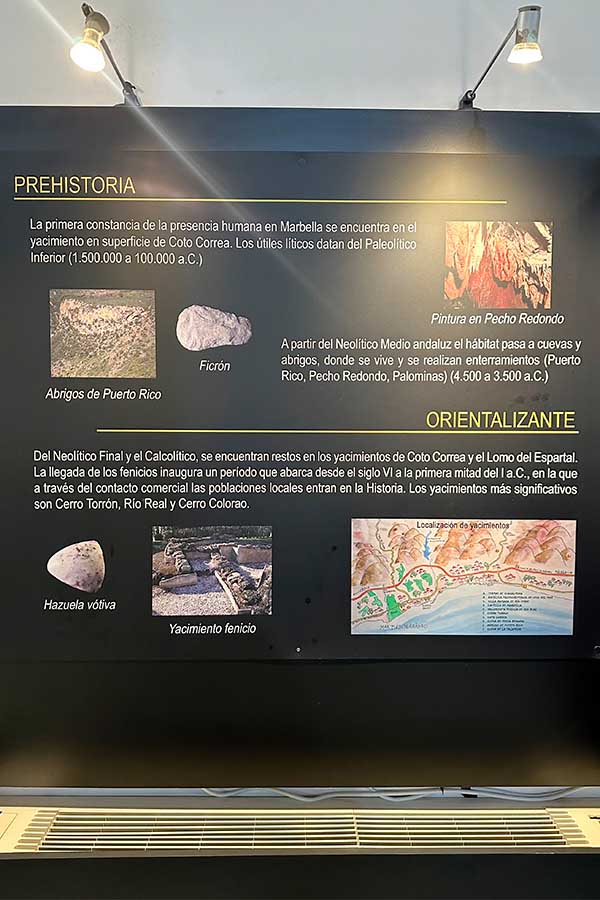
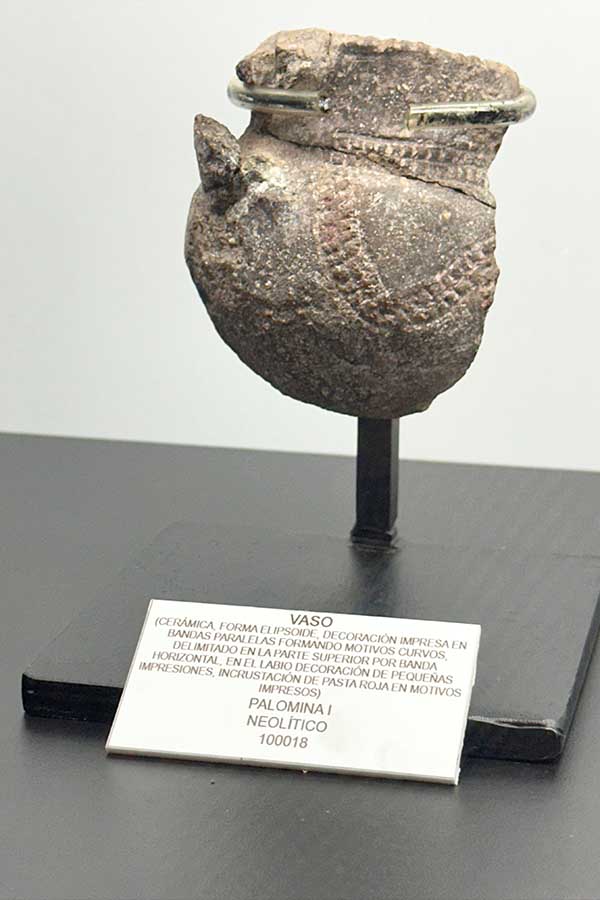
Long before olive groves shaped the landscape, traces of human presence were already here. Stone tools found at Coto Correa point to the Lower Paleolithic period, reminding us that life in this area began hundreds of thousands of years ago. Later, during the Neolithic period, people lived and buried their dead in nearby caves and rock shelters, leaving behind quiet marks of daily life. Centuries passed, and with the arrival of Arab rule in 711, Marbella became a network of farmsteads and fortifications before evolving into a walled city centered around its castle. The modern town began to take shape after the Christian conquest in 1485, expanding beyond its walls and filling with new buildings that still echo through Marbella today. Inside this small exhibition, all these layers of time felt softly folded together in one space.
The History of Cortijo Miraflores
The Centro Cultural Cortijo Miraflores is housed in a building with deep historical roots. Originally constructed in 1704 by Francisco Domínguez, the structure functioned as both a sugar cane mill and an olive oil mill. Two family crests still visible on the balcony at the entrance quietly confirm its origins.
Before becoming what it is today, the site was known as Miraflores Country House. It once belonged to the monks of the Monastery of San Francisco and later passed through generations of the Domínguez family. Over time, the estate expanded, incorporating oil mills powered by horses and agricultural facilities that supported rural life in the area.
Throughout the 18th and 19th centuries, the mill remained active, surviving ownership changes, legal disputes, and periods of decline. Eventually, the estate fell into abandonment and suffered damage, even facing the risk of demolition.
In 1990, the Town of Marbella acquired the property and undertook a full restoration. Today, Cortijo Miraflores has been carefully preserved and transformed into a cultural center that houses the municipal archive, reading rooms, exhibition spaces, and an archaeological and ethnological collection. Many original machines and grinders from its days as an oil mill are still visible, offering a tangible connection to its past.
Exploration Always Leads to Discovery
What I love most about exploring towns on foot, and speaking with the people who live and work there, is how often it leads to the unexpected.These moments feel like small gifts, especially for creative explorers.
I try to follow my intuition, which often begins with a simple thought: That looks interesting. I wonder what’s there.
When traveling, it’s natural to visit famous landmarks and well-documented attractions. I enjoy those too. But I always leave space for wandering without a plan. Getting a little lost often leads to places that never make it into guidebooks, the kind later described as hidden gems.
Even on my very first solo trip to Spain, I spent hours walking, observing, taking photos, and letting places reveal themselves slowly. This small olive oil museum inside Cortijo Miraflores felt like one of those moments, a reminder that curiosity is often rewarded.
How to Get to the Olive Oil Museum at Cortijo Miraflores
Centro Cultural Cortijo Miraflores is located just outside Marbella’s historic center, within walking distance from the old town. From Plaza de los Naranjos, the walk takes approximately fifteen minutes through residential streets.
Address:Avda. José Luis Morales y Marín, s/n 29601 Marbella
If you are arriving by car, there is street parking available nearby, though availability can vary depending on the time of day. Public buses serving the area also stop within a short walk of the cultural center.
Once inside don’t hesitate to ask questions at the reception desk. The staff are welcoming and happy to guide you, and who knows, they might lead you to a discovery you didn’t expect.
All images in this article were taken by Elena Sullivan, ArsVie Photo Studio and are protected by copyright. If you are interested in using any of the them, please contact me for permission. Thank you for understanding!
Spain Relocation Quiz
Dreaming of living in Spain? Discover which part of the country fits your rhythm, values, and lifestyle.
Hi, there! I’m Elena Sullivan, a fine art photographer, and creative adventurer. My first joyful experimentation with a camera extended into a passionate relationship where harmony represents a constant flow of elegant devotion. I follow my intuition and curiosity in search of eternal connections in nature, then use my camera to reveal it and share it with you! Every of my photo is curated with love and artistic excellence.